How you begin your morning can influence how you feel throughout the rest of the day. Waking up feeling rushed, skipping breakfast, or immediately checking your phone can make it harder to start the day with focus and energy.
A healthy morning routine does not need to involve waking up at 5 a.m. or following a complicated schedule. Small, consistent habits can make a meaningful difference to your physical and mental well-being.
Whether you are a busy professional, a student, a parent, or someone trying to improve everyday health, creating a simple morning routine can help you feel more organised and prepared.
In this guide, you will discover 10 practical habits to build a healthy morning routine that fits your lifestyle.
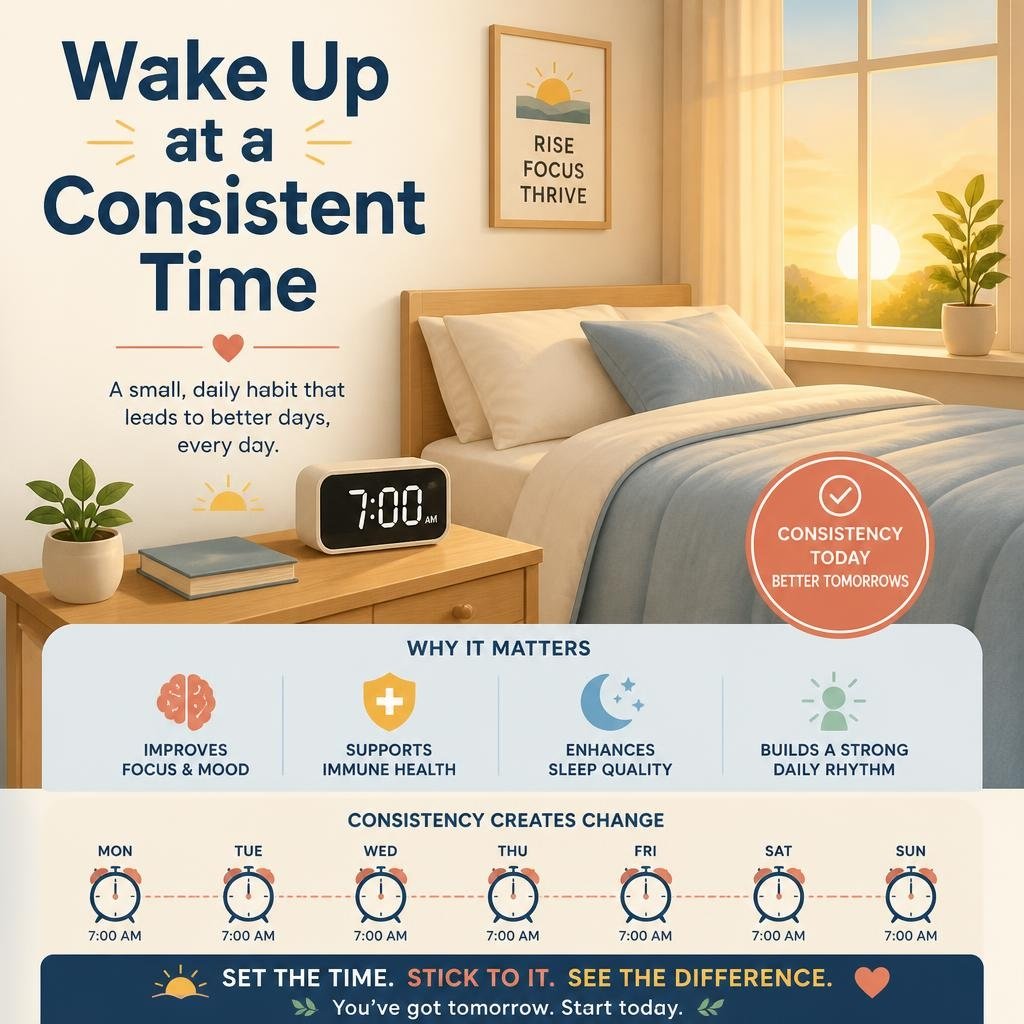
1. Wake Up at a Consistent Time
One of the most useful morning habits is waking up at approximately the same time each day. A consistent sleep and wake schedule helps support your body’s internal clock.
Try to choose a wake-up time that allows you to get enough sleep without rushing through your morning.
For better results:
Avoid changing your wake-up time dramatically between weekdays and weekends.
Prepare your clothes and essentials the night before.
Give yourself enough time to get ready calmly.
Avoid repeatedly pressing the snooze button.
Remember, waking up early is not automatically healthier. Getting sufficient sleep is more important than following someone else’s schedule.
2. Drink a Glass of Water
After several hours of sleep without drinking, having some water in the morning is a simple way to support hydration.
Water helps regulate body temperature, transport nutrients, support digestion, and maintain normal bodily functions.
You can make this habit easier by keeping a glass or bottle of water near your bed or in your kitchen.
There is no need to force yourself to drink excessive amounts. Your daily fluid needs depend on factors such as activity, climate, and health.
3. Get Natural Morning Light
Exposure to natural daylight in the morning can help regulate your body’s sleep-wake cycle.
If possible, spend a few minutes outside after waking up. You could sit on your balcony, walk around your garden, or enjoy breakfast near a window.
Morning daylight can help your body recognise that the day has started and support a more regular sleep schedule.
Avoid looking directly at the sun. Ordinary outdoor daylight is enough.
4. Make Time for Gentle Exercise
Physical activity in the morning can help you feel more alert and establish a positive habit for the day.
You do not need an intense workout. Start with activities that suit your fitness level, such as:
A 10–20-minute walk.
Gentle stretching.
Yoga or mobility exercises.
Light cycling.
A short bodyweight workout.
If you prefer exercising later in the day, that is perfectly fine. The most important thing is to find a time when you can exercise consistently.
Breakfast can provide energy and important nutrients after an overnight fast. However, individual preferences and nutritional needs differ, so there is no single breakfast routine that works for everyone.
If you enjoy eating breakfast, choose a combination of protein, fibre, and nutritious carbohydrates.
Some healthy breakfast ideas include:
Oatmeal with berries and nuts.
Boiled eggs with wholegrain toast.
Greek yoghurt with fruit and seeds.
Wholegrain toast with avocado and eggs.
A smoothie containing fruit, yoghurt, and oats.
Adding protein to breakfast may also help you feel satisfied for longer.
Many people reach for their phones as soon as they wake up. Notifications, emails, social media, and news updates can quickly fill your mind with distractions.
Instead, try giving yourself the first 15–30 minutes of the morning without unnecessary screen time.
Use that time to:
Drink water.
Get dressed.
Enjoy breakfast.
Stretch or walk.
Plan your priorities.
You do not need to avoid technology completely. Simply create a little space before allowing notifications to control your attention.
7. Practise Mindfulness or Gratitude
Your mental well-being deserves attention just as much as your physical health.
A few quiet minutes in the morning can help you approach the day with greater awareness and a clearer sense of direction.
You could try:
Deep breathing for five minutes.
Writing down three things you appreciate.
Reading something inspirational.
Prayer or personal reflection.
Setting one positive intention for the day.
These activities do not guarantee a stress-free day, but they can provide a useful opportunity to pause and organise your thoughts.
8. Plan Your Daily Priorities
A healthy morning routine is not only about food and exercise. It can also help you organise your responsibilities.
Take five minutes to identify the most important tasks you need to complete.
Write down three realistic priorities rather than creating an overwhelming list.
For example:
Complete an important work task.
Take a 20-minute walk.
Prepare a nutritious dinner.
Having a simple plan can make your day feel more manageable and help you focus on what matters.
9. Maintain a Simple Personal Care Routine
Looking after your personal hygiene is another important part of starting the day well.
A basic morning routine might include:
Brushing your teeth.
Washing your face.
Showering when needed.
Applying sunscreen before outdoor exposure.
Wearing clean and comfortable clothes.
If you spend time outdoors, use broad-spectrum sunscreen with SPF 30 or higher, following the product instructions and local sun-safety advice.
These small habits can help you feel comfortable, refreshed, and ready for daily activities.
10. Prepare a Healthy Start the Night Before
A successful morning often begins the previous evening.
If you stay up late searching for clothes, preparing breakfast, or completing unfinished tasks, your morning may become unnecessarily stressful.
Try preparing a few things before going to bed:
Choose your clothes for the next day.
Prepare breakfast ingredients.
Fill your water bottle.
Organise your work or school bag.
Write down tomorrow’s priorities.
Reduce screen time before bedtime.
Preparing ahead can save time and make it easier to follow your morning routine consistently.
Example of a Simple Healthy Morning Routine
You do not need to follow a strict timetable. Here is an example of how you might organise a relaxed morning.
Time
Activity
6:30 am
Wake up and drink water
6:40 am
Get natural daylight
6:50 am
Gentle stretching or walking
7:10 am
Shower and personal care
7:30 am
Eat a nutritious breakfast
7:45 am
Review daily priorities
8:00 am
Begin work or daily activities
Adjust these times to suit your sleep schedule, work commitments, family responsibilities, and personal preferences.
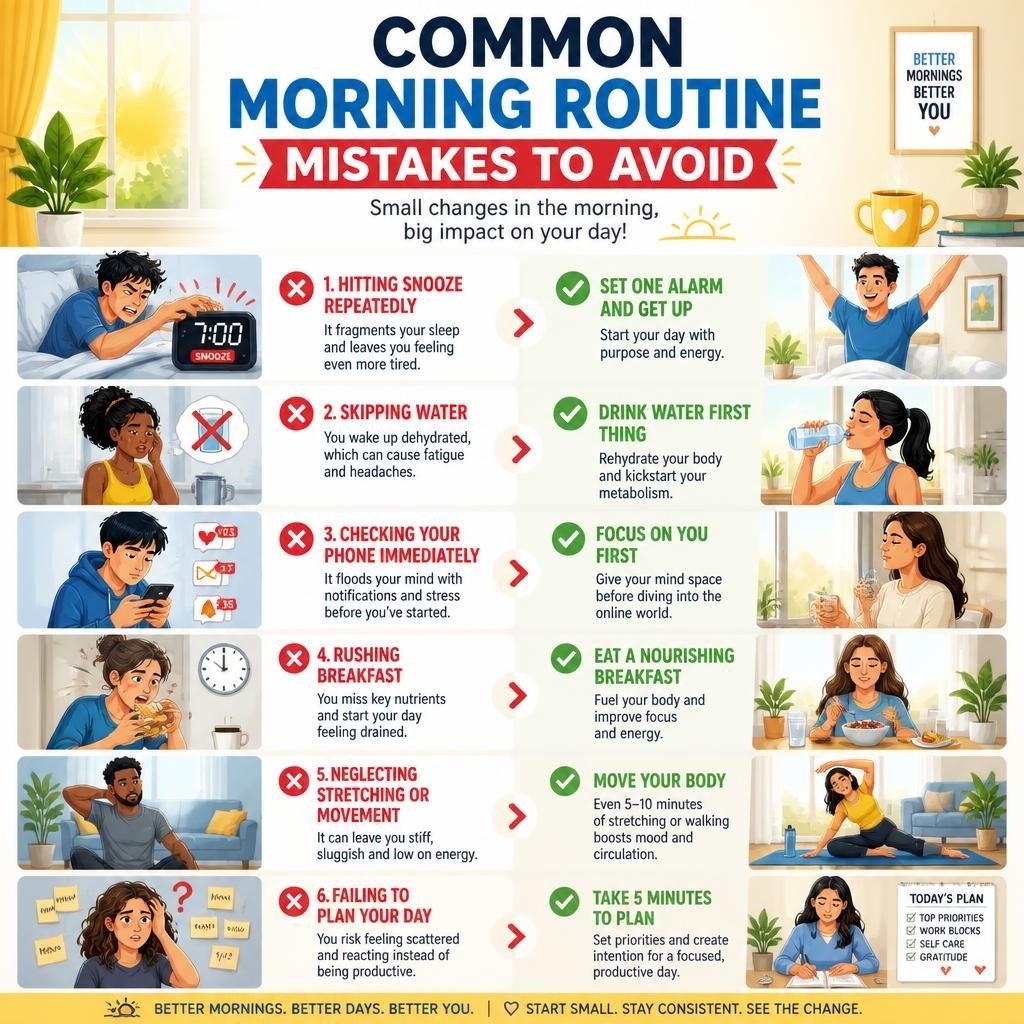
Common Morning Routine Mistakes to Avoid
Even a well-planned routine can become difficult if it is too complicated.
Avoid these common mistakes:
Waking up too early: Reducing sleep just to follow an early schedule may leave you tired during the day.
Skipping hydration: Remember to drink fluids throughout the day, not just in the morning.
Following an unrealistic routine: Trying to exercise, meditate, cook, read, and complete multiple tasks before work can quickly become overwhelming.
Checking social media immediately: Constant notifications can distract you before your day has properly started.
Expecting instant results: Healthy habits take time to become part of your lifestyle.
Start with two or three habits and gradually add more when they feel comfortable.
How Long Does It Take to Build a Healthy Morning Routine?
There is no fixed number of days required to establish a new habit. The time varies depending on the behaviour, your lifestyle, and how consistently you practise it.
Instead of trying to change everything at once, focus on repeating a few manageable actions.
For example, begin by waking up at a consistent time, drinking water, and taking a short walk. Once these activities become easier, introduce another habit.
Consistency is generally more useful than perfection.
Frequently Asked Questions
1. What is the best healthy morning routine?
A useful morning routine includes enough sleep, hydration, natural daylight, physical activity, nutritious food when appropriate, and time to organise your day. The best routine is one you can maintain comfortably.
2. Is waking up at 5 a.m. healthy?
Waking up at 5 a.m. is not automatically healthier than waking up later. What matters most is getting sufficient sleep and maintaining a consistent schedule that suits your daily responsibilities.
3. Should I exercise before breakfast?
It depends on your fitness goals, health, and personal comfort. Some people enjoy exercising before breakfast, while others prefer eating first. Choose the approach that makes you feel comfortable and allows you to exercise safely.
4. What should I drink first thing in the morning?
Water is a simple and suitable choice for most people. You do not need special detox drinks or expensive products to start your morning healthily.
5. How can I create a morning routine when I am busy?
Start with three simple activities: wake up at a consistent time, drink water, and spend five minutes planning your day. Even a short routine can provide structure without taking too much time.
6. Can a healthy morning routine improve mental well-being?
A consistent routine may support mental well-being by creating structure, encouraging physical activity, and making time for relaxation. However, it is not a substitute for professional support when someone is experiencing ongoing mental health difficulties.
Conclusion
Building a healthy morning routine does not require a perfect schedule or dramatic lifestyle changes. It starts with small decisions that support your physical health, mental well-being, and daily productivity.
Wake up at a time that allows enough sleep, drink water, enjoy natural daylight, move your body, and make time for a nutritious breakfast if it suits you. Add a few minutes of mindfulness and prepare your priorities before starting the day.
Most importantly, choose habits that fit your real life. A simple routine you can maintain is more valuable than an ambitious routine you abandon after a few days.
Start small, stay consistent, and give yourself time to build a healthier way of living.
Want to restore perfect balance… and NEVER fall again?
Then follow this simple 11-sec “foot massage”.
Just take your shoe off…
And do THIS on your foot for 11 seconds.
Harvard research show it revives your “balance nerve” & boosts stability by 92% overnight: