
Introduction
Walking and running are two of the most popular ways to stay physically active. Both exercises can improve cardiovascular health, support weight management, strengthen muscles, and contribute to better mental well-being.
Table of Contents
ToggleHowever, when comparing walking vs. running, many people wonder which activity offers better results. Is running always more effective for burning calories? Can walking provide enough exercise to improve fitness? And which option is better for beginners?
The answer depends on your fitness level, health, personal goals, and how consistently you exercise.
In this guide, we compare walking and running, explore their health benefits, and explain how to choose an exercise routine that fits your lifestyle.
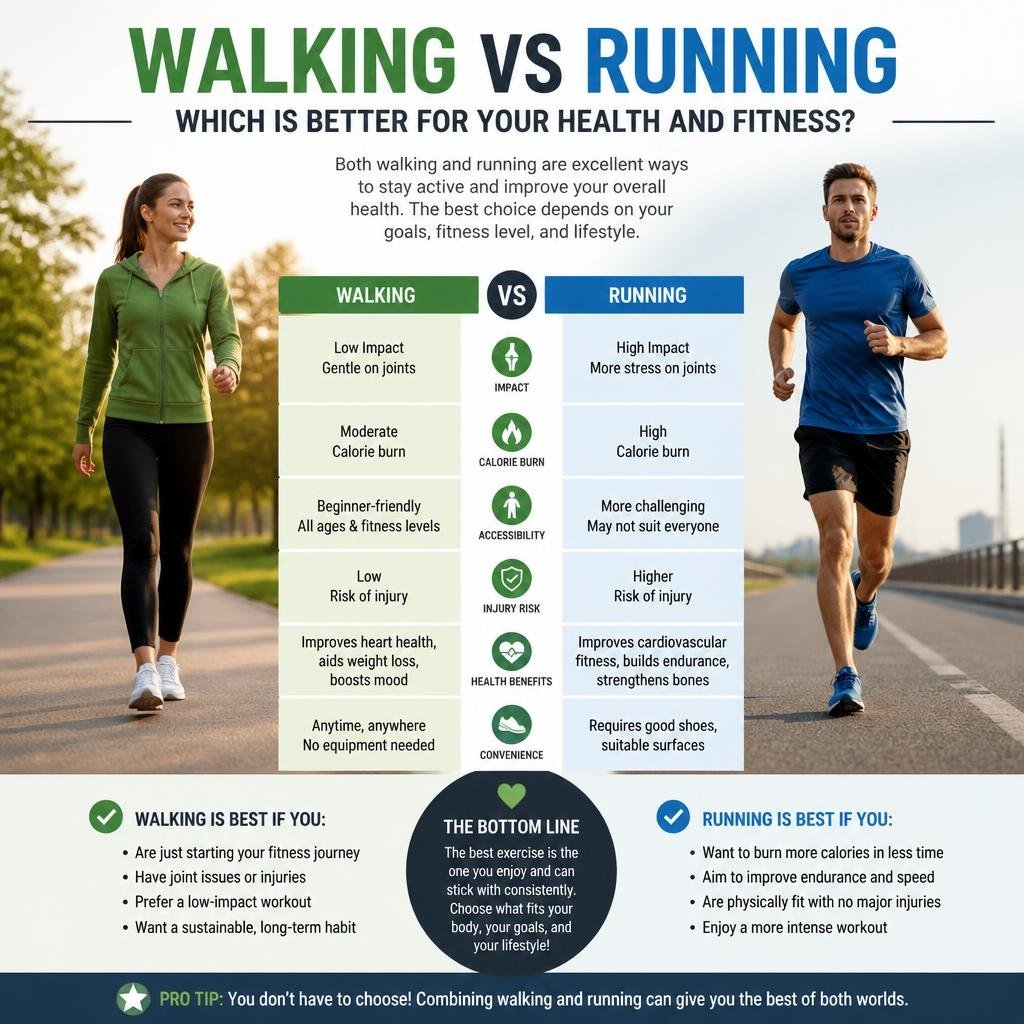
1. Walking vs Running: Understanding the Difference
Walking and running are both forms of aerobic exercise, but they differ in intensity, speed, and physical impact.
Walking is generally a low-impact activity in which at least one foot remains in contact with the ground at all times. It is accessible to most fitness levels and can be included in everyday activities.
Running is a higher-intensity exercise involving a brief airborne phase during each stride. It usually requires more energy and places greater impact forces on the body.
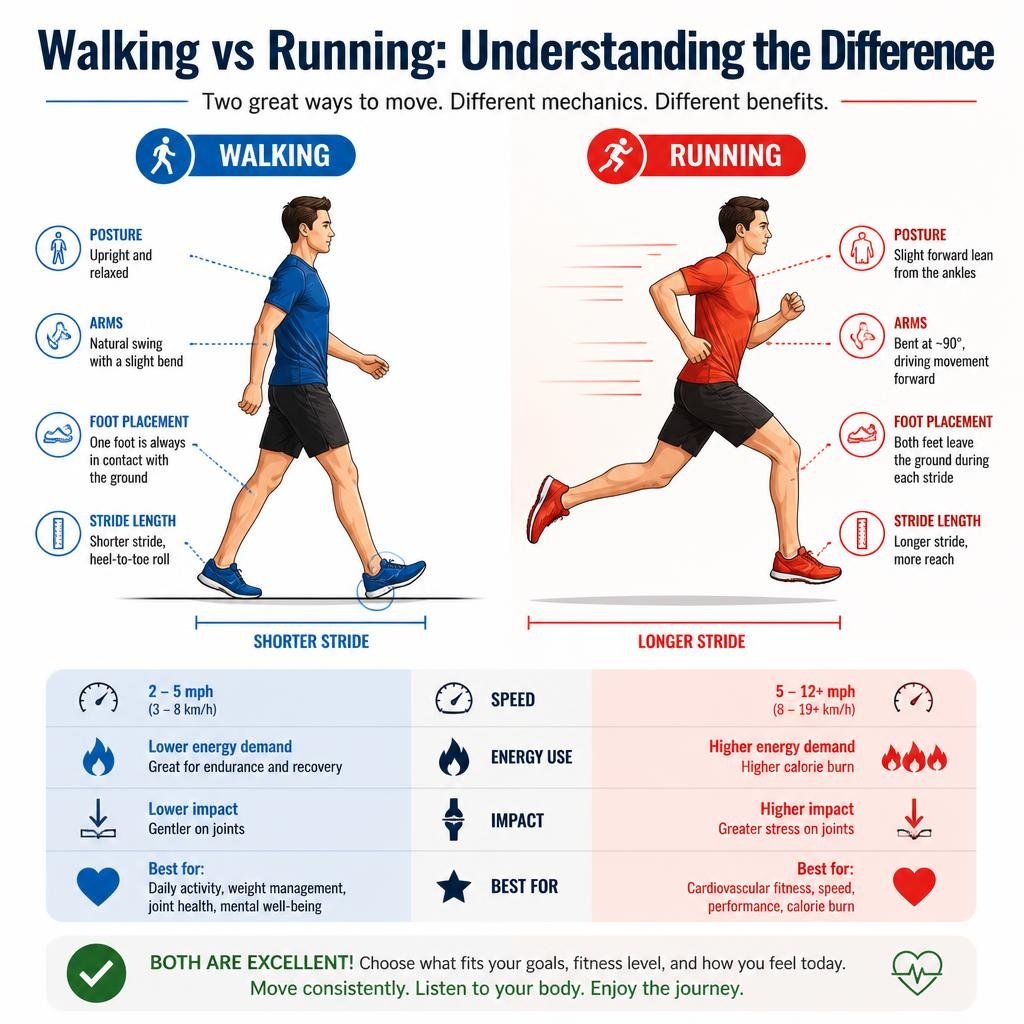
Here is a simple comparison:
| Feature | Walking | Running |
|---|---|---|
| Exercise intensity | Usually low to moderate | Usually moderate to vigorous |
| Calorie expenditure | Generally lower per minute | Generally higher per minute |
| Joint impact | Lower | Higher |
| Fitness level | Suitable for most beginners | May require gradual conditioning |
| Equipment | Comfortable walking shoes | Suitable running shoes |
| Recovery | Usually shorter | May require more recovery |
| Time commitment | Often longer for similar energy expenditure | Often shorter for similar energy expenditure |
Both activities can contribute to a healthy lifestyle.
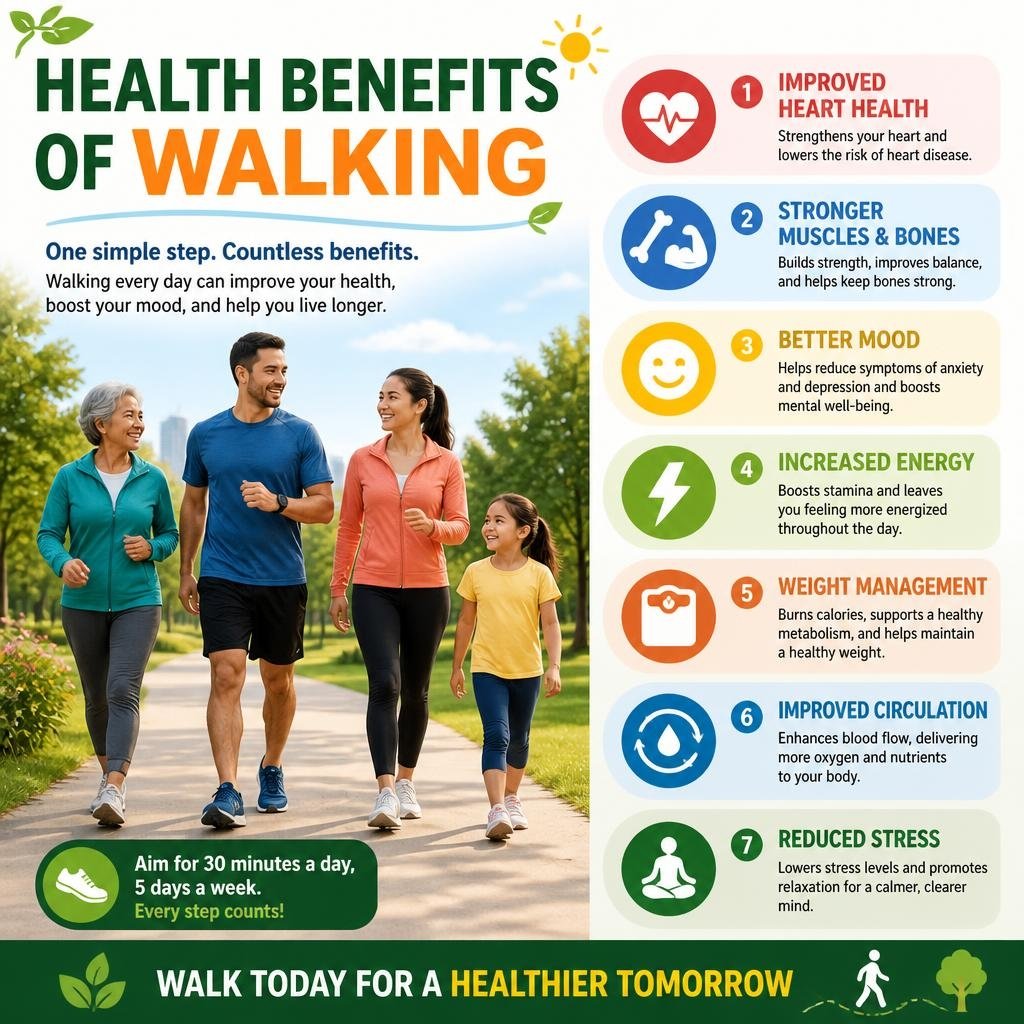
2. Health Benefits of Walking
Walking may look simple, but regular walking offers several important health benefits.
Supports Heart Health
Brisk walking increases your heart rate and encourages better cardiovascular fitness. Regular physical activity can help improve blood pressure and support overall heart health.
Helps Manage Body Weight
Walking uses energy and can contribute to weight management when combined with balanced nutrition and other healthy habits.
Although it generally burns fewer calories per minute than running, longer or more frequent walking sessions can still make a meaningful contribution.
Improves Mental Well-Being
Spending time walking outdoors may help reduce feelings of stress and improve your mood.
A short walk during a busy day can also provide a useful break from work, screens, and everyday responsibilities.
Supports Joint Mobility
Walking involves repetitive movement that helps keep the body active. For many people, it is a comfortable way to maintain mobility without the higher impact associated with running.
People with joint pain or existing medical conditions should choose an appropriate activity based on professional advice.
Easy to Include in Everyday Life
You do not necessarily need to visit a gym to walk regularly.
You can walk to nearby shops, use stairs, take a lunchtime walk, or explore local parks.
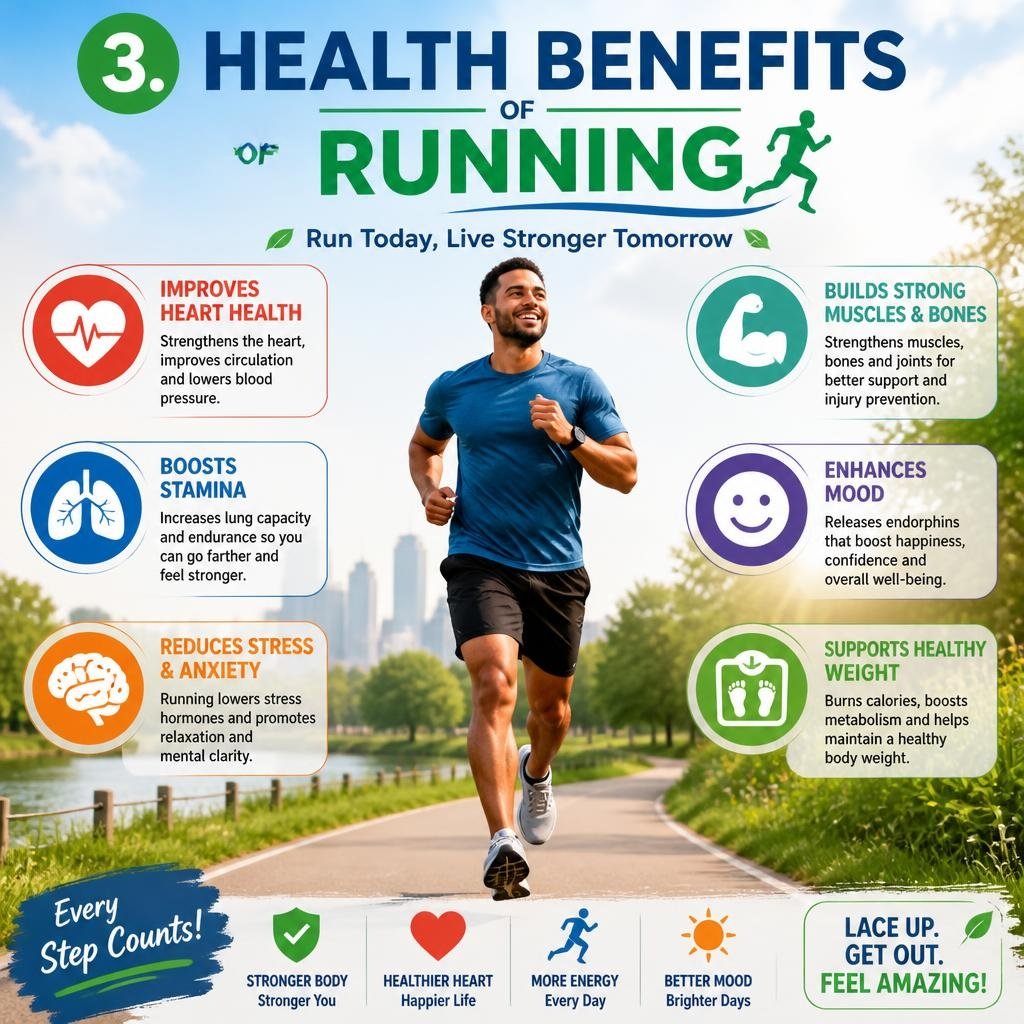
3. Health Benefits of Running
Running offers many of the same benefits as walking, often at a higher exercise intensity.
Improves Cardiovascular Fitness
Running challenges your heart and lungs, helping improve aerobic capacity and cardiovascular endurance.
Over time, consistent running can help your body become more efficient at handling physical activity.
Burns More Calories Per Minute
Running generally requires more energy per minute than walking at a comfortable pace.
This makes it a time-efficient option for people who want a higher-intensity workout.
Builds Lower-Body Strength and Endurance
Running repeatedly engages muscles in your legs, hips, and core.
Regular training can improve muscular endurance and help develop lower-body strength.
Supports Mental Health
Running can provide an opportunity to manage stress, improve mood, and enjoy time outdoors.
Some runners also find that following a training routine provides motivation and a sense of achievement.
Improves Stamina
Consistent running can gradually improve endurance, allowing you to perform physical activities for longer periods.
Beginners should increase distance and intensity gradually to reduce the risk of overuse injuries.
4. Walking vs Running: Which Burns More Calories?
One of the most common questions about walking vs running is which exercise burns more calories.
In general, running burns more calories per minute because it requires greater energy expenditure.
However, the exact number depends on several factors:
Body weight.
Exercise speed.
Distance covered.
Duration.
Terrain and incline.
Individual fitness and movement efficiency.
For example, a person weighing more may use more energy performing the same activity than someone weighing less.
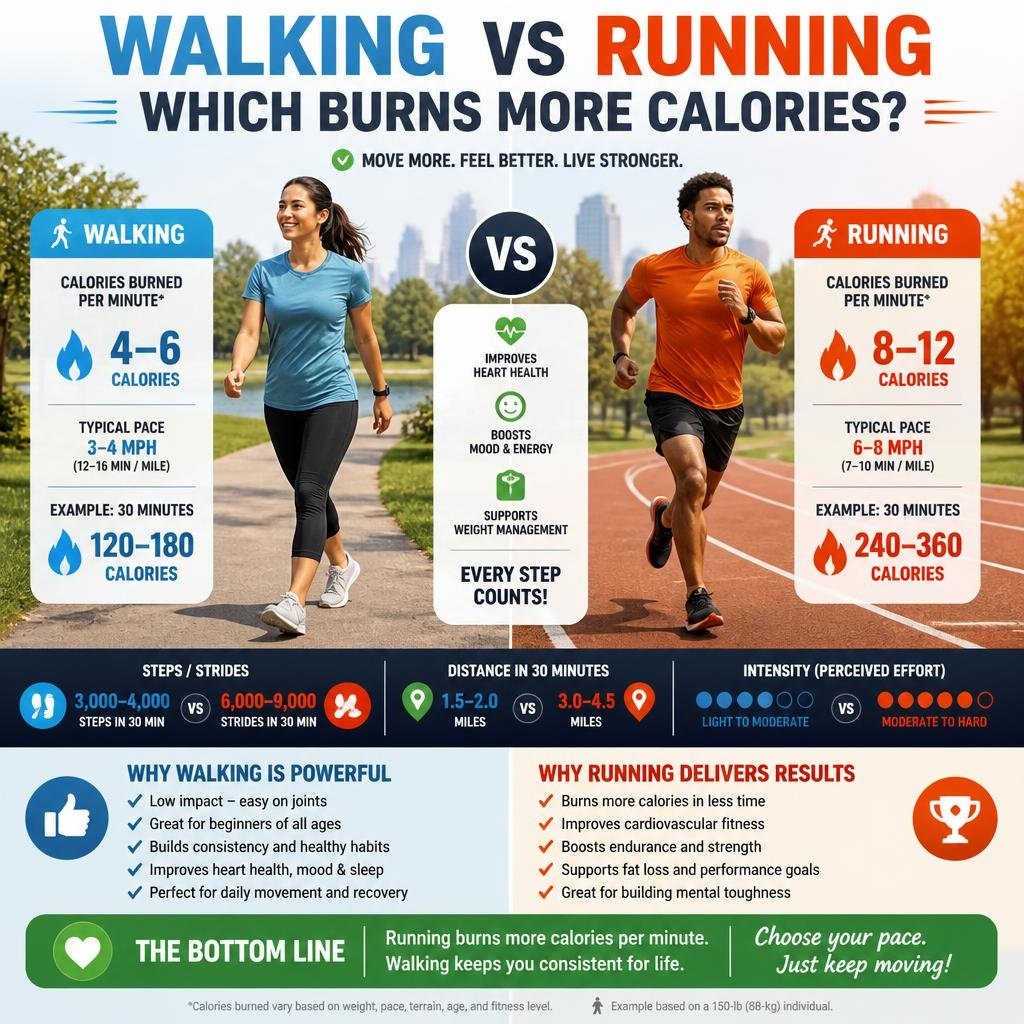
Walking uphill or at a brisk pace can also increase energy expenditure compared with a slow walk on flat ground.
Remember that calorie estimates from watches and fitness apps are approximations, not exact measurements.
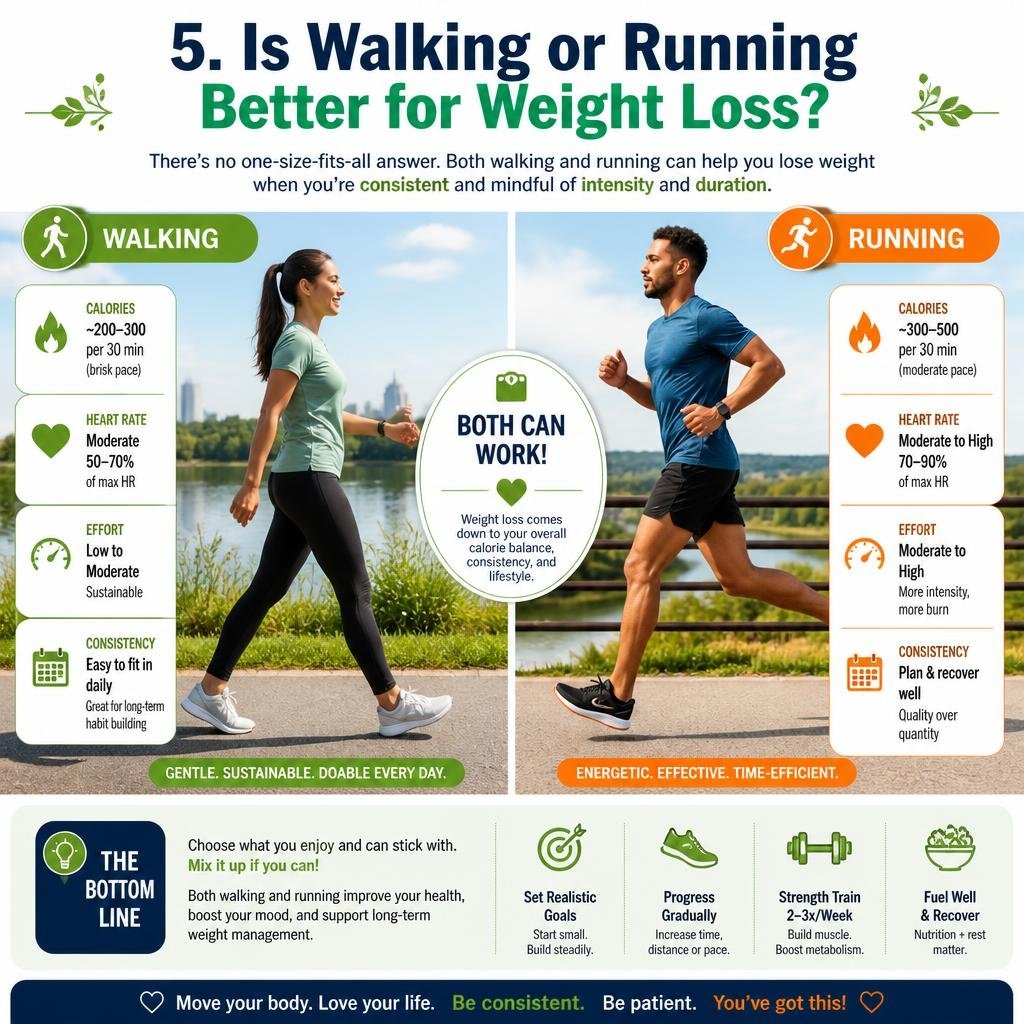
5. Is Walking or Running Better for Weight Loss?
Both walking and running can support weight management.
Running may help you burn more calories in a shorter period, while walking allows many people to exercise for longer periods with less physical impact.
The most suitable choice depends on what you can maintain consistently.
Walking for Weight Management
Walking is a useful starting point for people who are new to exercise or prefer a lower-impact activity.
It can help increase daily energy expenditure without requiring an intense workout.
Running for Weight Management
Running may be suitable for people who already have a reasonable fitness base and want a more vigorous exercise routine.
However, running more frequently or intensely than your body can tolerate may increase injury risk.
Combining Walking and Running
You do not need to choose only one.
Alternating walking and running can help beginners gradually develop endurance while keeping exercise manageable.
For more information, explore our guide to healthy weight management.
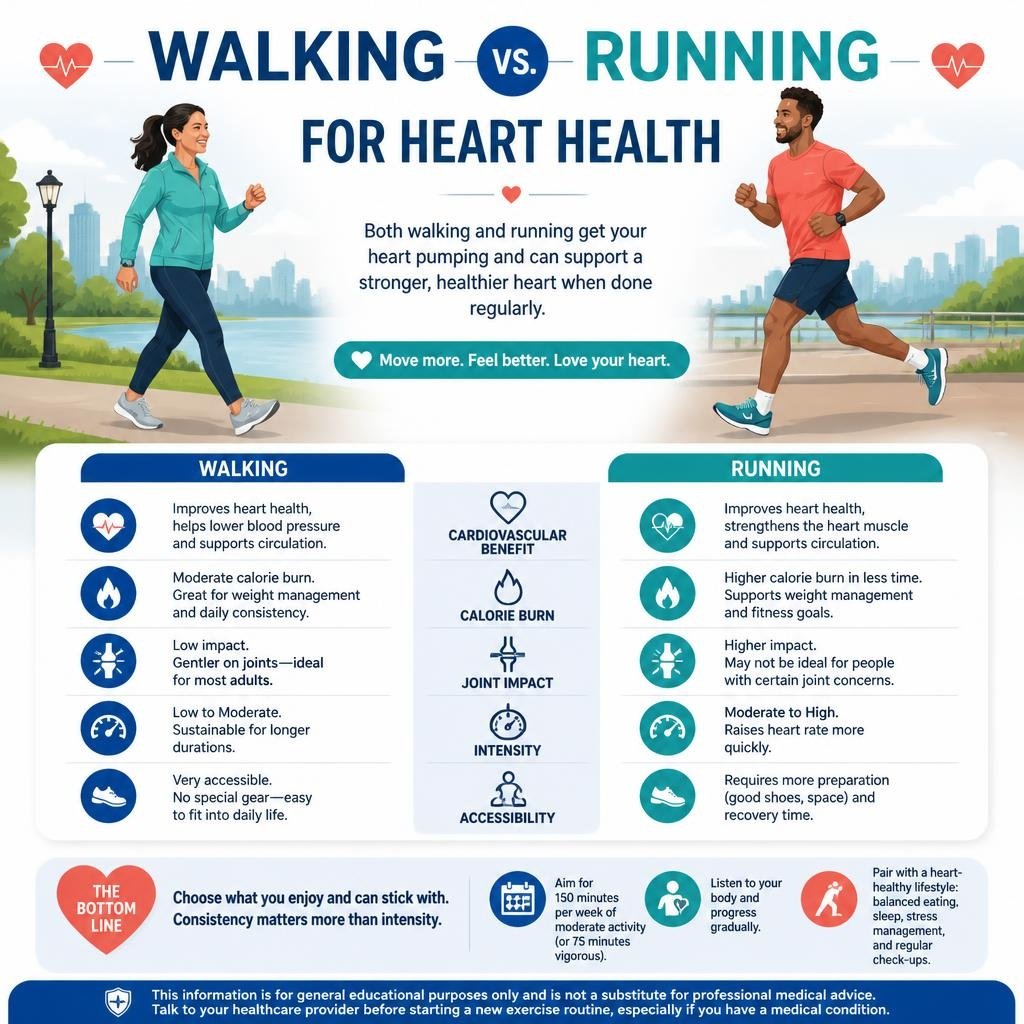
6. Walking vs Running for Heart Health
Both walking and running can support cardiovascular health when performed regularly.
Walking at a brisk pace can raise your heart rate and improve aerobic fitness.
Running generally creates a stronger cardiovascular challenge because of its higher intensity.
According to widely used physical activity guidelines for adults, a useful weekly target is:
150–300 minutes of moderate-intensity aerobic activity.
Or 75–150 minutes of vigorous-intensity aerobic activity.
Or an equivalent combination of both.
Adults should also aim to include muscle-strengthening activities on at least two days each week.
You do not need to complete all your weekly exercise in one session. Breaking activity into shorter periods throughout the week is a practical approach.
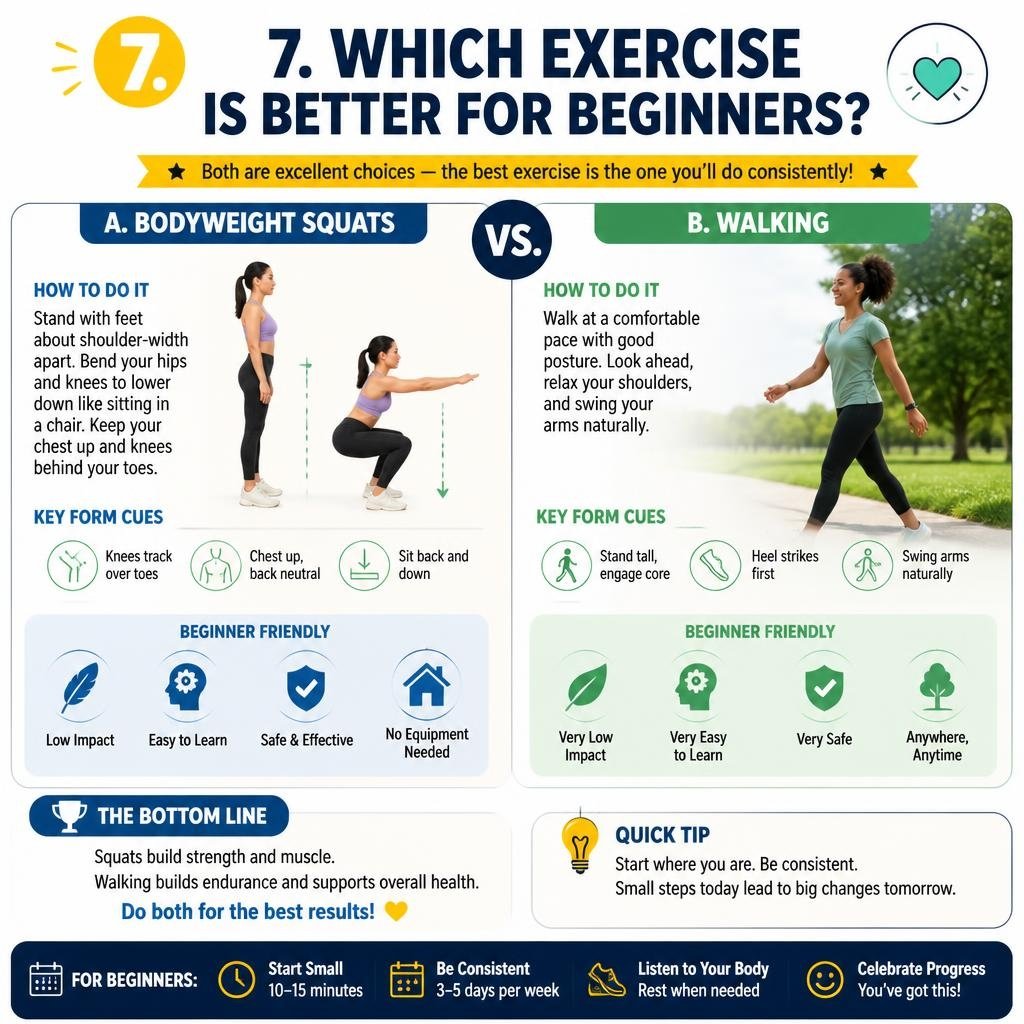
7. Which Exercise Is Better for Beginners?
For most people who are new to exercise, walking is a sensible starting point.
It is relatively easy to adjust the pace, distance, and duration according to your current fitness level.
A beginner could start with:
A 10-minute walk.
Gradually increase to 15–20 minutes.
Build towards 30 minutes on most days.
Increase speed or distance when comfortable.
Once your fitness improves, you may introduce short running intervals if you wish.
For example, alternate one minute of gentle jogging with two minutes of walking. Repeat this cycle for 15–20 minutes, adjusting the session to your fitness level.
Stop if you experience unusual pain, dizziness, chest discomfort, or severe breathlessness.
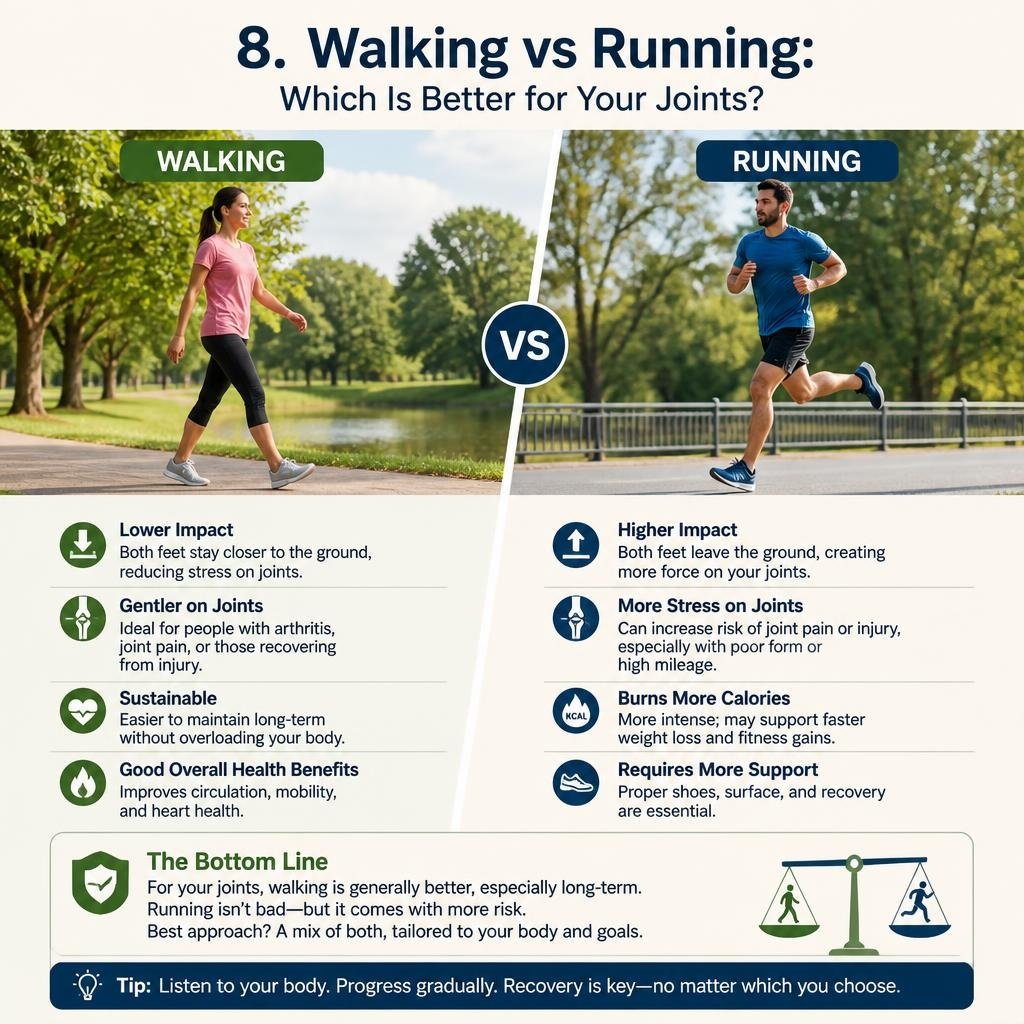
8. Walking vs Running: Which Is Better for Your Joints?
Walking generally places less impact stress on the body than running.
For this reason, it may be a more comfortable option for people who are starting exercise, returning after a break, or managing certain joint conditions.
Running involves repeated impact forces, which can increase stress on the feet, ankles, knees, and hips.
However, running is not automatically harmful to everyone’s joints. Injury risk depends on factors such as training load, strength, footwear, running technique, recovery, and individual health.
If you have persistent joint pain, arthritis, or a previous injury, speak with a healthcare professional or physiotherapist before beginning a running programme.
9. Walking vs Running for Mental Health
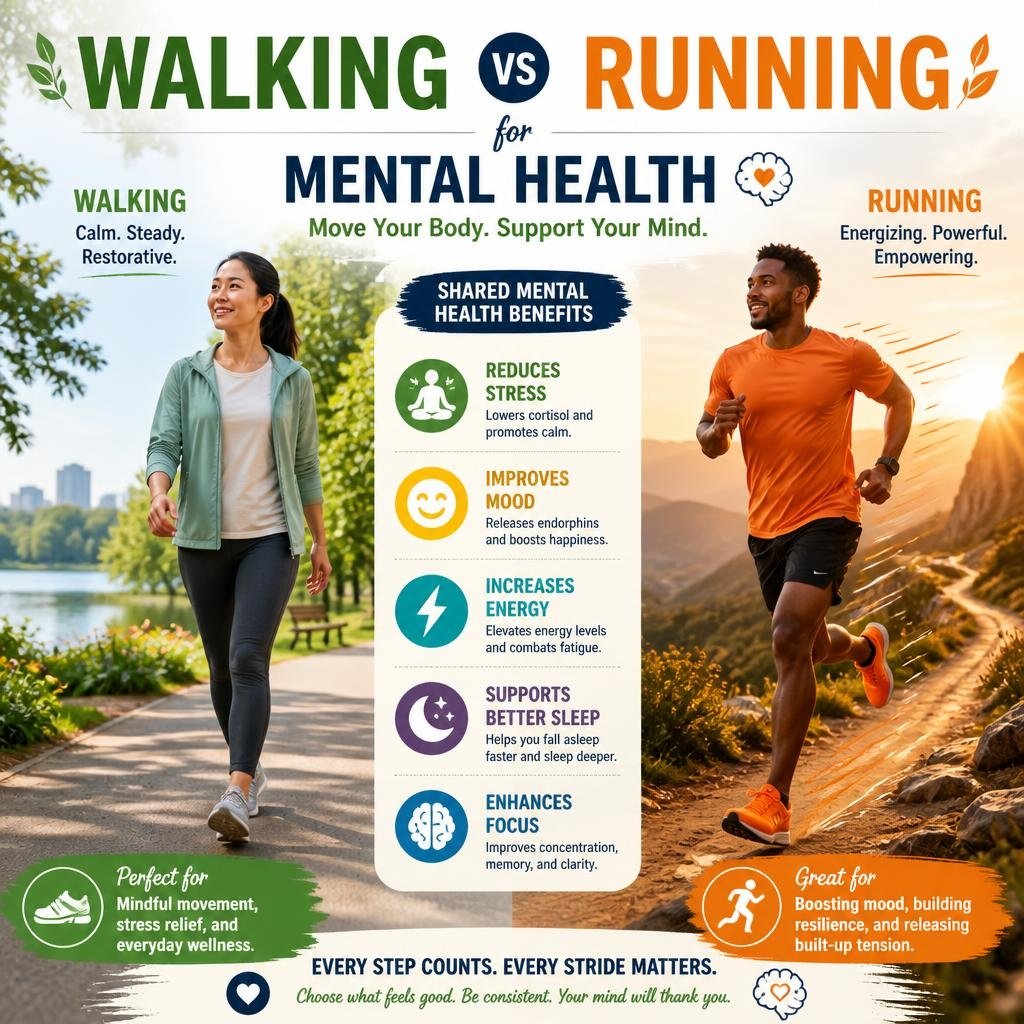
Physical activity can support both physical and psychological well-being.
Walking may provide a relaxing opportunity to enjoy nature, spend time with friends, and take a break from daily pressures.
Running can offer similar benefits while also providing a more vigorous physical challenge.
Both activities may help improve mood and reduce feelings of stress.
The best exercise is often the one that you enjoy enough to repeat regularly.
10. Can You Combine Walking and Running?
Yes. Combining walking and running is an effective way to build an exercise habit.
This approach is particularly useful for beginners who want to progress gradually.
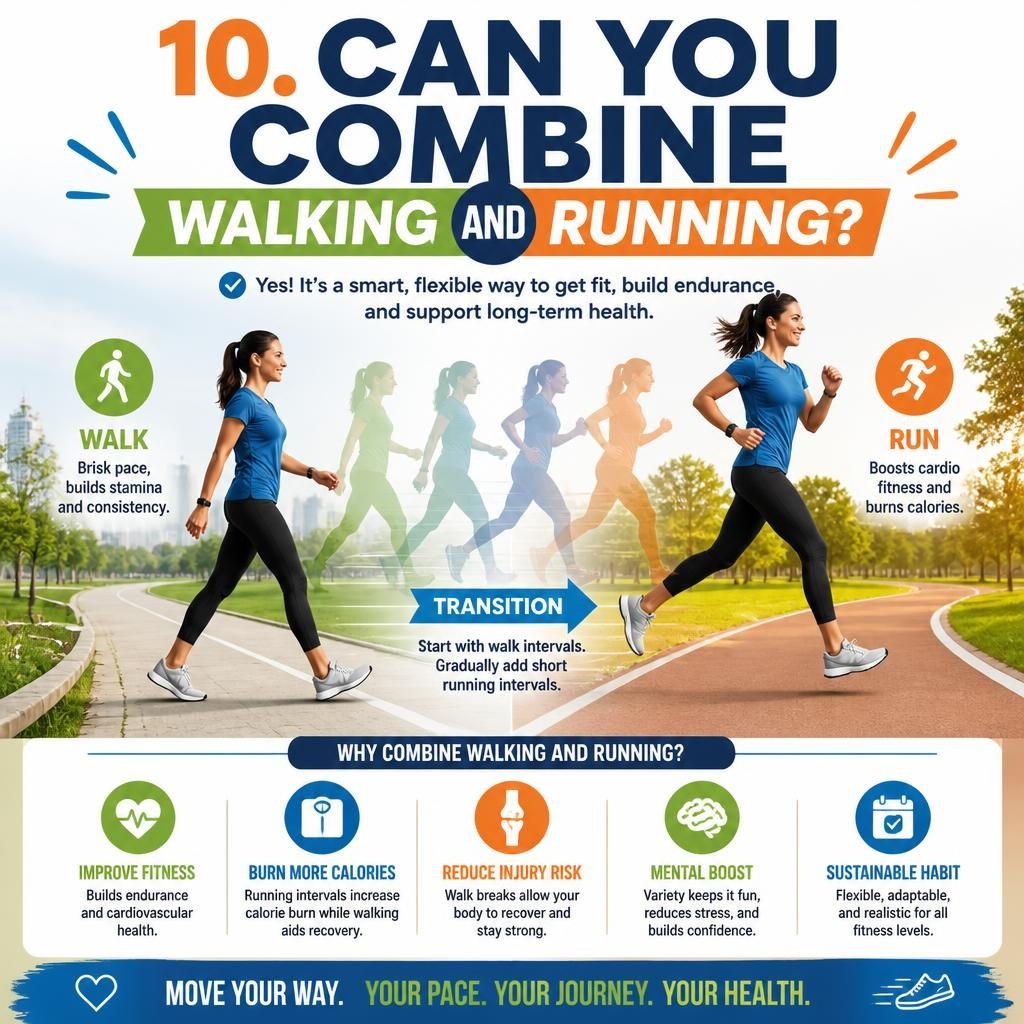
You could try this simple routine:
| Session | Walking | Running |
|---|---|---|
| Week 1 | 3 minutes | 1 minute |
| Week 2 | 3 minutes | 2 minutes |
| Week 3 | 2 minutes | 3 minutes |
| Week 4 | 2 minutes | 4 minutes |
Repeat each interval several times within a comfortable workout.
This is an illustrative progression, not a requirement to increase running every week. Repeat or reduce a level if you need more time to adapt.
Include rest or easier activity days between challenging sessions.
11. How Often Should You Walk or Run?
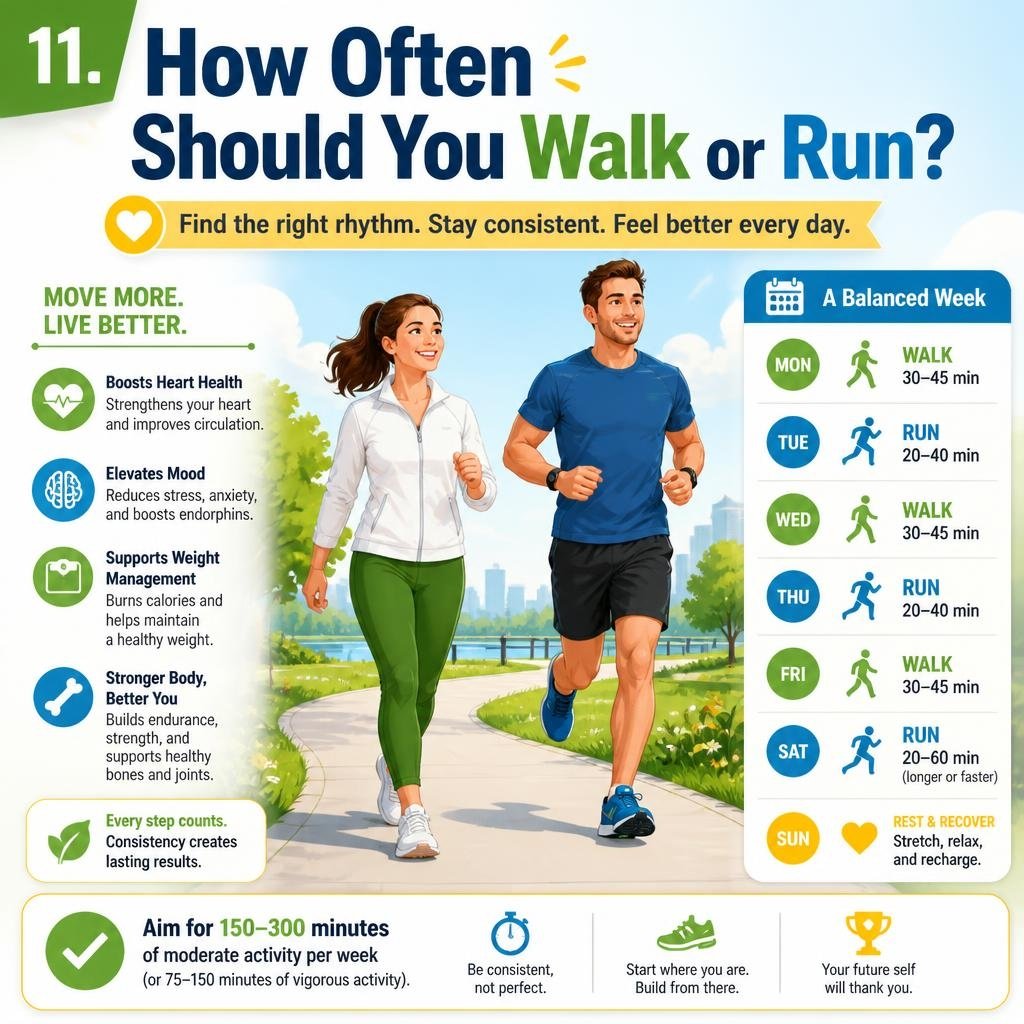
Your ideal exercise frequency depends on your fitness, goals, and recovery needs.
A general approach for adults is to work towards the recommended weekly physical activity targets.
For walking, you might begin with shorter sessions on most days.
For running, two or three manageable sessions per week may be a reasonable starting point for some beginners, with recovery days between harder sessions.
Avoid increasing exercise duration, distance, and intensity too quickly.
Consistency and gradual progression are more important than pushing yourself to exercise as hard as possible.
12. What Equipment Do You Need?
Walking requires very little equipment.
A comfortable pair of supportive shoes and clothing suitable for the weather may be enough.
Running usually requires more attention to footwear because of the repeated impact and physical demands involved.
Consider:
Comfortable running shoes that fit properly.
Breathable clothing.
Water for longer sessions or hot conditions.
Reflective clothing when exercising in low light.
Sunscreen and a hat when outdoors.
You do not need expensive fitness equipment to begin either activity.
13. Common Mistakes to Avoid
Whether you choose walking or running, certain mistakes can make exercise harder to maintain.
Starting too intensely: Begin at a level that matches your current fitness.
Ignoring recovery: Your body needs time to adapt to increased physical activity.
Wearing unsuitable footwear: Shoes that do not fit properly may cause discomfort.
Skipping warm-ups: Begin with a few minutes of easy movement before more vigorous exercise.
Ignoring pain: Do not treat persistent or worsening pain as something you must simply push through.
Expecting immediate results: Improvements in fitness and endurance develop over time.
14. A Simple Weekly Walking and Running Plan
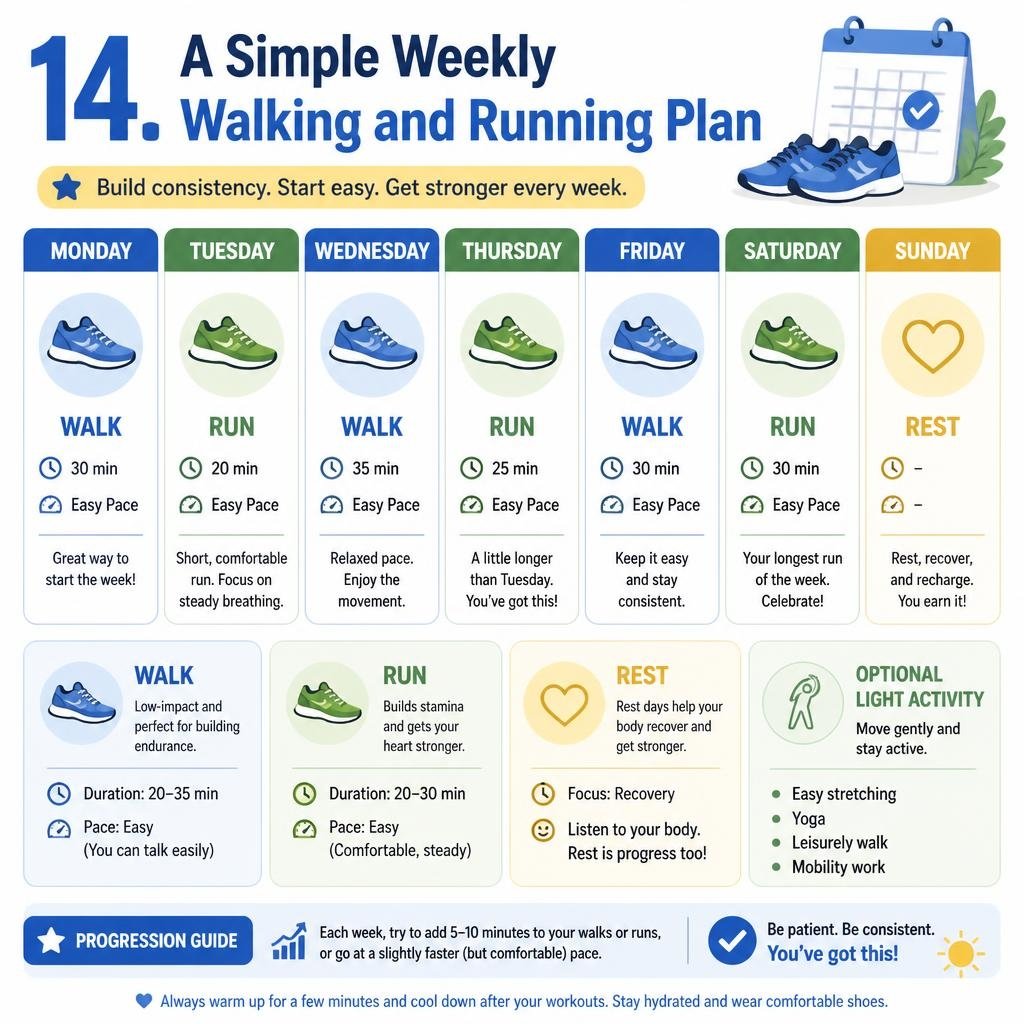
Here is an example of a balanced weekly activity schedule.
| Day | Activity |
|---|---|
| Monday | 25-minute brisk walk |
| Tuesday | Rest or gentle stretching |
| Wednesday | 20-minute walk and jog intervals |
| Thursday | 25-minute walk |
| Friday | Rest or light activity |
| Saturday | 30-minute walk or comfortable run |
| Sunday | Relaxed walk or recovery |
Adjust the schedule to your ability. If you are completely new to exercise, start with shorter walking sessions before adding running.
Frequently Asked Questions
1. Is walking better than running?
Neither exercise is universally better. Walking is lower impact and accessible to most fitness levels, while running generally provides a more vigorous workout in less time. Your health, fitness, and personal preferences should guide your choice.
2. Does running burn more calories than walking?
Generally, yes. Running usually burns more calories per minute than walking. However, total energy expenditure depends on body weight, speed, distance, duration, and other individual factors.
3. Can walking help you lose belly fat?
Walking can contribute to overall fat loss when combined with an appropriate eating pattern and consistent physical activity. However, no exercise can specifically target fat loss from the stomach.
4. Is 30 minutes of walking every day enough?
Thirty minutes of brisk walking each day can contribute substantially towards the recommended weekly moderate-intensity physical activity target for adults.
5. Can beginners start running every day?
It is generally better for beginners to build up gradually rather than run hard every day. Walking, rest days, and manageable running sessions can help the body adapt.
6. Is walking good for older adults?
Walking can be an accessible way for many older adults to maintain physical activity, mobility, and cardiovascular fitness. The pace and duration should suit individual health and ability.
7. Can I get fit by walking alone?
Yes. Regular brisk walking can improve aerobic fitness and contribute to better overall health. For a more complete exercise programme, include muscle-strengthening activities as well.
Conclusion
When comparing walking vs running, the best choice depends on your individual health, fitness level, and lifestyle.
Walking is an accessible, lower-impact activity that can support cardiovascular health, weight management, and mental well-being. Running offers a more vigorous workout and generally burns more calories per minute.
You do not have to choose one permanently. Combining walking and running can provide variety, help build endurance, and make exercise more enjoyable.
Start at a comfortable level, increase activity gradually, and focus on consistency. A regular exercise habit is far more valuable than an occasional intense workout.
How A Morning Metabolism Signal Helped Me Lose My First 18Lbs In 30 Days… And Transform My Entire Body, Losing A Total of 72Lbs In Just 4 Months!
I tried everything…
I got a gym membership, but the classes just left me sore and discouraged. I felt like a blob next to the younger women in their tight yoga pants.
I tried the “Flat Belly” diet drink. After 5 days of choking down 6 cups a day, I’d actually GAINED 2 pounds
Then came Nutrisystem, Atkins, intermittent fasting, keto, cleanses… you name it, I tried it.
But they all had the same problem: they starved me.