The food you eat, the amount you move, your sleep habits and the way you manage stress can all influence your overall wellbeing.
Many people believe that living healthily requires expensive food, strict diets, or hours at the gym. In reality, sustainable health habits are often simple. Regular walking, balanced meals, enough sleep, and time to relax can all contribute to a healthier daily routine.
This guide explores practical ways to improve your lifestyle without making your life unnecessarily complicated.
1. Start Your Day with a Healthy Morning Routine
The way you begin your morning can influence how you approach the rest of the day.
A healthy morning routine does not need to be complicated.
Try starting with:
Drinking a glass of water.
Opening the curtains and getting natural light.
Eating a nutritious breakfast if you are hungry.
Spending a few minutes stretching.
Planning your main priorities for the day.
You do not have to follow a perfect routine. Choose habits that fit your schedule and make your mornings more manageable.
Physical activity is important for maintaining health and mobility.
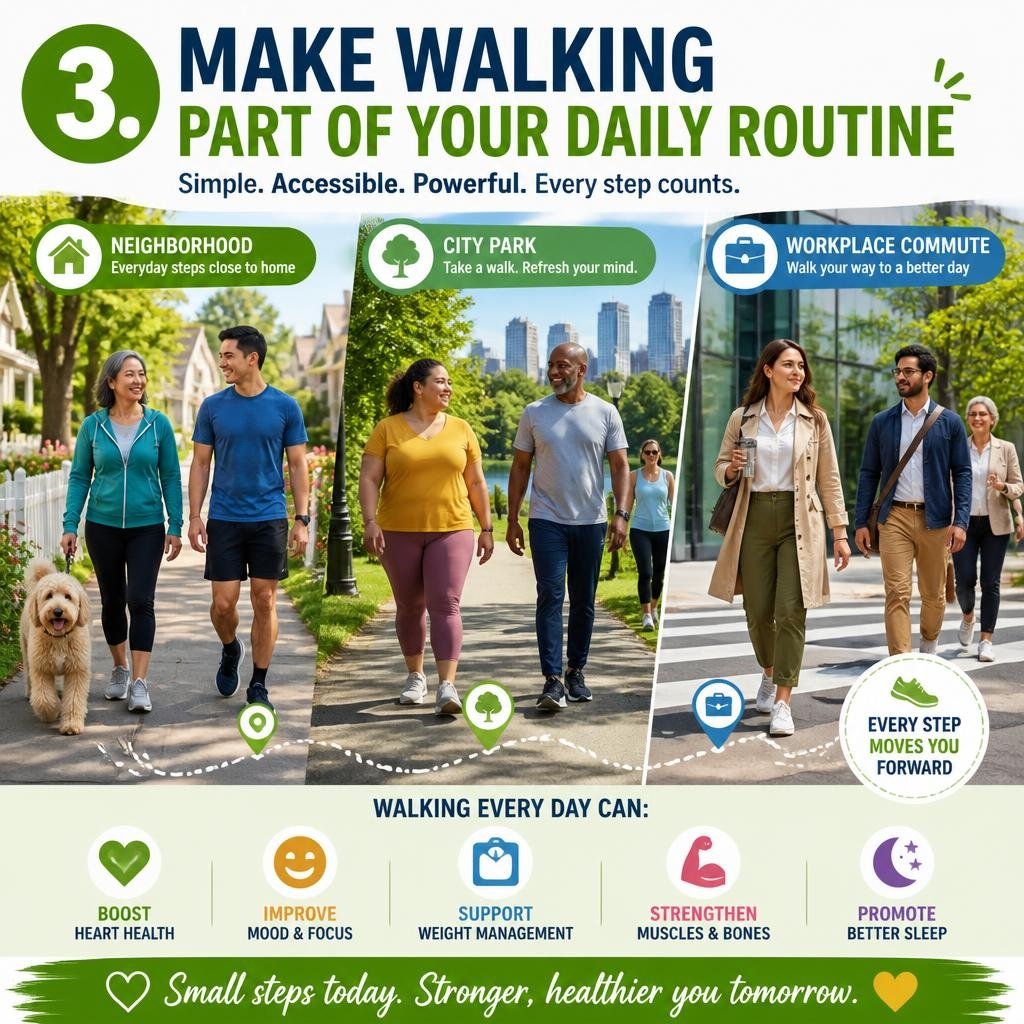
Walking is one of the easiest ways to increase your daily movement. It does not require specialised equipment, and you can often fit it around your existing responsibilities.
You could:
Walk during your lunch break.
Take a short walk after dinner.
Use the stairs when appropriate.
Walk to nearby shops.
Explore a local park on weekends.
Adults should aim for at least 150 minutes of moderate-intensity activity each week, or an equivalent amount of vigorous activity.
If you are currently inactive, begin with shorter walks and gradually increase your activity.
Water is essential for many processes in your body, including temperature regulation, digestion and circulation.
Your fluid requirements depend on factors such as activity, climate, body size and health.
In Australia, warmer weather and outdoor activity can increase the need to pay attention to hydration.
Useful habits include:
Keep a reusable water bottle nearby.
Drink water regularly throughout the day.
Drink more when exercising or spending time in hot conditions.
Include water-rich foods such as fruit and vegetables.
Thirst, urine colour and individual circumstances can provide useful clues, but people with medical conditions affecting fluid balance should follow professional advice.
Exercise supports cardiovascular fitness, muscle strength, mobility and general wellbeing.
A balanced activity routine can include:
Walking or cycling.
Swimming.
Strength training.
Yoga or gentle stretching.
Recreational sports.
Other activities you enjoy.
Muscle-strengthening activities are also important. Adults should aim to work major muscle groups on at least two days each week.
Choose activities that match your abilities and build up gradually.
8. Reduce Long Periods of Sitting
Many people spend much of their day sitting at a desk, driving or using electronic devices.
Long periods of sitting can reduce daily movement.
Try introducing small changes:
Stand up regularly.
Walk during phone calls.
Take movement breaks.
Use a standing desk if suitable.
Stretch between tasks.
Walk short distances instead of driving when practical.
Small amounts of movement throughout the day can help you become less sedentary.
9. Build Healthy Social Connections
Health is not only about physical activity and food. Social wellbeing also matters.
Positive relationships can provide emotional support, encouragement and a sense of belonging.
You can strengthen social connections by:
Making time for family and friends.
Joining community activities.
Participating in group exercise.
Checking in with people you care about.
Asking for support when you need it.
Healthy relationships should include mutual respect, communication, and appropriate personal boundaries.
10. Create a Sustainable Healthy Lifestyle
One of the biggest challenges in improving health is maintaining good habits.
People sometimes make too many changes at once and become discouraged when they cannot maintain them.
Instead, focus on gradual improvement.
For example:
Week 1: Add a short daily walk.
Week 2: Include more vegetables in your meals.
Week 3: Establish a consistent bedtime.
Week 4: Add two manageable strength-training sessions.
Once these habits become familiar, you can introduce additional changes.
Progress does not need to be perfect to be valuable.
11. Limit Unhealthy Habits
Some everyday habits can negatively affect long-term health.
Where possible:
Avoid smoking and tobacco products.
Limit or avoid alcohol.
Reduce excessive consumption of highly processed foods.
Avoid sitting for unnecessarily long periods.
Protect your skin from excessive sun exposure.
Avoid extreme diets and unproven health treatments.
If you are trying to change a long-standing habit, start with realistic steps and seek appropriate support.
12. Make Your Environment Support Your Health
Your surroundings can influence your daily choices.
A few small adjustments can make healthy habits easier.
For example:
Keep fruit visible and accessible.
Prepare healthy meals in advance.
Place walking shoes near the door.
Keep water available.
Create a comfortable sleep environment.
Set aside a regular time for exercise.
Rather than depending entirely on motivation, make your environment support the habits you want to develop.
13. Monitor Your Progress Without Becoming Obsessed
Tracking your habits can help you recognise progress.
You might record:
How often you exercise.
How regularly you prepare meals.
Your usual sleeping schedule.
How much time you spend walking.
Whether you are making time for relaxation.
Avoid measuring your health only through body weight or appearance. Energy, strength, mobility, mood and consistency are also meaningful indicators of wellbeing.
Frequently Asked Questions
What is the most important habit for a healthy lifestyle?
There is no single habit that guarantees good health. Regular physical activity, balanced nutrition, quality sleep and stress management all contribute to overall wellbeing.
Can I improve my health without going to the gym?
Yes. Walking, cycling, home workouts, swimming and other activities can help you stay physically active without a gym membership.
How long does it take to develop healthy habits?
It varies from person to person. Some habits become familiar quickly, while others require more time and consistency. Focus on gradual progress rather than a fixed deadline.
Is breakfast necessary for a healthy lifestyle?
Breakfast can be part of a balanced diet, but individual preferences and nutritional needs vary. The overall quality of your diet matters more than following one universal meal schedule.
How can I maintain a healthy lifestyle when I am busy?
Start with manageable habits. Prepare simple meals, take short walks, maintain a regular sleep schedule and use small breaks to add movement throughout the day.
Conclusion
A healthy lifestyle is created through everyday decisions rather than temporary changes.
Eating balanced meals, staying active, sleeping well, drinking enough water and managing stress can all contribute to better wellbeing.
You do not need to change everything at once. Begin with one or two realistic habits and build from there.
The goal is not perfection. It is to create a healthier routine that you can maintain throughout your life.
The World's Only Crystal Water Bottles Created To Re-Charge Water So That It Can Help Support Healthy Weight Loss
Drinking 2-3 liters of water from our SLIMCRYSTAL bottles each day is a great way to support healthy weight loss, maintain healthy digestion and high energy levels, and can support your health and long term youthfulness amongst many benefits.
The unique combination of crystals is so powerful that it has been used for decades by crystal healing experts in order to help thousands of men and women change their lives for the better, and now it’s your turn to try it.